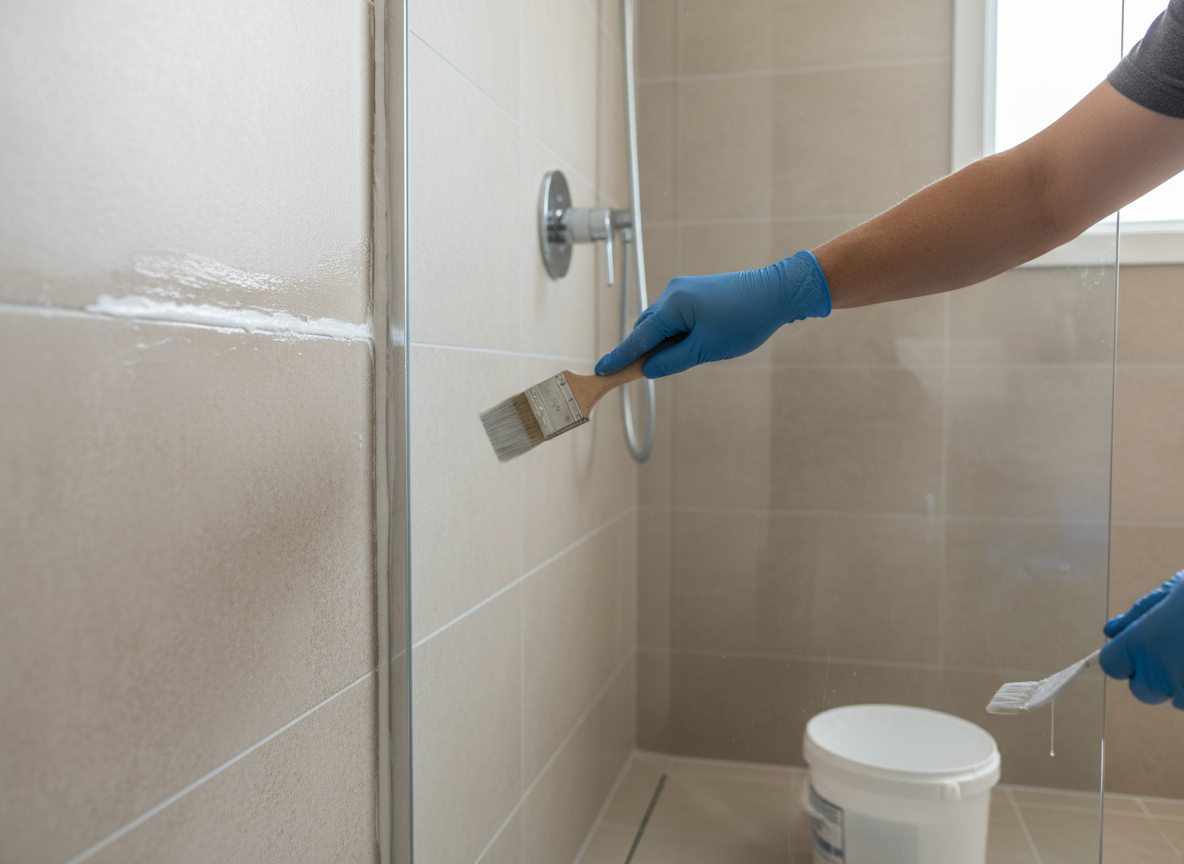
About regrouting and resealing a Perth shower
Regrouting and resealing is often enough when the grout is cracked, stained or mouldy and the silicone along corners and the floor junction is lifting, but the tiles are firm and there is no damp beyond the shower. Old grout is raked out, fresh grout goes in, and the silicone joints are cut away and replaced.
What a fresh reseal can achieve
New grout and silicone close the gaps where water sits and mould grows. Splashes stay on the tile surface instead of soaking into the joints, the recess is easier to clean, and the corners where walls meet the floor can flex without splitting. For a shower that is worn rather than broken, that is usually the right scale of fix.
Why grout and silicone are not the membrane
Grout and silicone are the visible top layer. The membrane under the tiles is what actually keeps water out of the floor and walls. If that membrane has split or was never sealed properly at the drain, fresh grout only covers the evidence for a while, and water keeps travelling below the tiles out of sight.
Leak signs that point past a reseal
Some clues suggest the problem sits deeper: tiles that sound hollow or move underfoot, damp or bubbling paint on the wall behind the shower, swollen skirting or vanity panels nearby, a musty smell that returns soon after cleaning, or grout that keeps cracking in the same spot. Mention any of these before anyone prices grout alone.
Making the regrout or bigger repair decision
It is normal not to know which camp your shower falls in. A contractor can look at the joints, tap the tiles and check the surrounding walls before recommending a reseal, a targeted repair or a full strip-out. Settling that question first saves paying twice for the same shower.
Next step: describe your grout and silicone
Note where the grout is cracked or dark, which silicone joints have lifted, roughly how old the shower is and your suburb. Take a close photo of the floor corner and the drain, plus one of the wall on the other side of the shower. Those details help licensed and insured local contractors judge whether a reseal fits.
Shower Regrouting and Resealing Services We Offer
✓Regrouting
Removing worn, cracked or stained grout from floor and wall joints and replacing it so water stays on the tile surface.
✓Silicone Replacement
Cutting away lifted or mouldy silicone at corners, the floor junction and around screens, then applying a fresh flexible seal.
✓Epoxy Grout Sealing
A harder wearing joint option for showers with sound tiles, where the aim is a longer lasting surface seal rather than a retile.
How it works
- 1
Describe the shower
Share where the grout is cracked or mouldy, which silicone joints have lifted, any damp outside the recess and your suburb, with a few clear photos.
- 2
Check what sits underneath
A contractor looks at the joints, taps the tiles and checks nearby walls to see whether a reseal will hold or whether the membrane needs attention.
- 3
Agree the scope
Confirm in writing whether the job is a regrout, a silicone reseal, epoxy sealing or a larger repair, and which products and cure times apply.
- 4
Cure and keep it clean
Leave the shower dry for the cure time you were given, then rinse and ventilate after use so mould is slower to return to the fresh joints.